
Which Refractive Errors Can Be Treated?
Refractive laser procedures reshape the cornea to reduce dependence on glasses or contact lenses in suitable adults with stable myopia, hyperopia or astigmatism. Suitability depends on more than the prescription alone.
Laser Methods
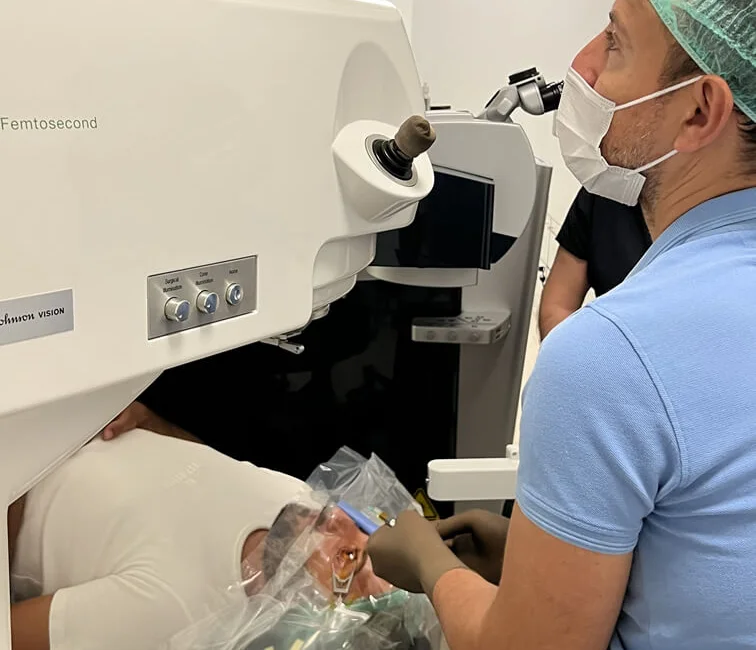
PRK, LASIK, femtosecond-assisted techniques and small-incision procedures have different indications, recovery patterns and corneal requirements. The method is selected after examination rather than by preference alone.
Preoperative Examination
Refraction, corneal topography and tomography, corneal thickness, tear film, pupil size, retina and general eye health are reviewed. Contact lenses may need to be stopped before measurements.
Procedure and Recovery
The laser stage is brief, but preparation and checks take longer. Recovery differs by technique. Prescribed drops, eye protection and scheduled follow-up are important.
Safety and Limitations
No procedure is entirely risk-free. Dryness, glare, under- or over-correction and other uncommon complications are discussed individually. Keratoconus, unstable refraction and certain ocular or systemic conditions may rule out treatment.